
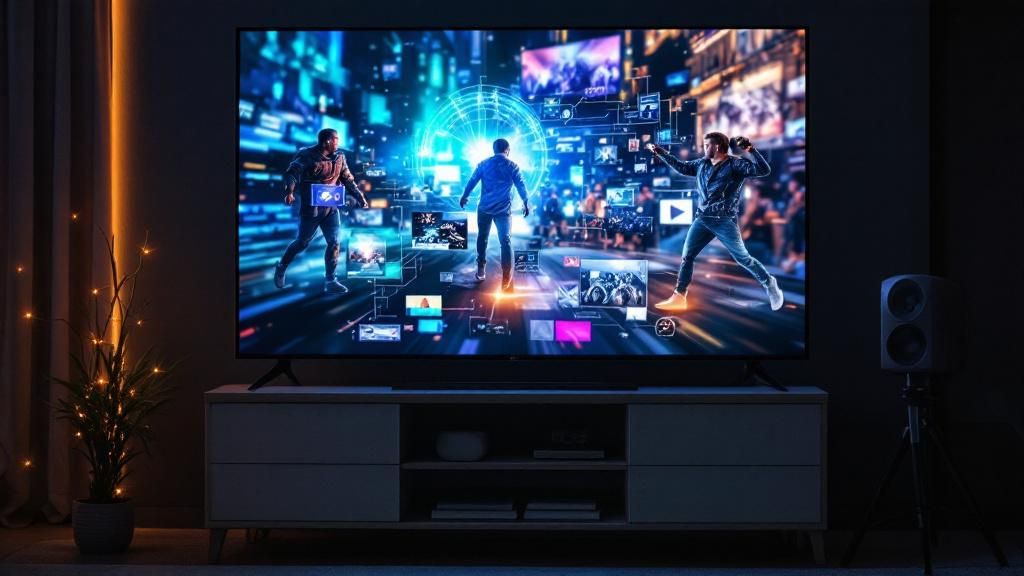
The television landscape has undergone a seismic shift. Once ruled by linear programming and scheduled content, the medium now yields to on-demand streaming platforms that have fundamentally altered how millions view material. As traditional broadcasters see viewership decline, services like Netflix, Amazon Prime, and Disney+ have established themselves as dominant forces. This article examines the sweeping changes reshaping viewing habits, examining how streaming’s flexibility and vast libraries are changing how viewers interact with content whilst leaving conventional television scrambling to adapt.
The Emergence of On-Demand Entertainment
The growth of streaming services has transformed audience preferences and consumption patterns throughout the UK and worldwide. Audiences now prioritise flexibility, requiring the ability to watch content at their preferred time and location, rather than conforming to rigid broadcast schedules. This major transformation has given viewers greater control to tailor their own viewing selecting from comprehensive collections encompassing various genres and worldwide programming. Streaming platforms exploit this desire for autonomy, delivering viewers complete authority over their entertainment choices, substantially disrupting the conventional broadcast television structure.
The ease of access cannot be exaggerated in understanding streaming’s remarkable rise. Without ad breaks or time restrictions, viewers appreciate uninterrupted narrative experiences, notably compelling for binge-watching entire seasons in succession. This frictionless access has fostered fresh entertainment behaviours, particularly amongst Gen Z and millennial viewers who have not known conventional TV as their principal viewing medium. The proliferation of mobile devices and improved broadband infrastructure has further accelerated this transformation, allowing uninterrupted playback across multiple platforms and locations simultaneously.
Evolving Consumer Tastes and Viewing Patterns
The shift from traditional broadcasting to streaming platforms represents a core shift in how audiences prioritise entertainment consumption. Today’s viewers increasingly favour options that deliver greater control over what, when, and where they view content. This transformation extends beyond basic convenience; it represents a shift across generations in expectations regarding media accessibility. Younger audiences, in particular, have developed with content on demand as the norm, making scheduled television broadcasts feel increasingly antiquated and restrictive to their viewing preferences.
Adaptability and Convenience
Streaming platforms have transformed viewing flexibility by removing the constraints of traditional scheduling altogether. Subscribers can now pause, rewind, and resume shows at their leisure, accommodating busy modern lifestyles. This freedom encompasses binge-watching entire series in rapid succession or spacing episodes across multiple weeks, allowing viewers full control over how they watch content. The ability to access content across multiple devices—smartphones, tablets, laptops, and televisions—additionally boosts convenience, allowing users to continue watching seamlessly no matter where they are or what they’re doing.
The ease of access has proven particularly appealing to busy working professionals and households juggling multiple commitments. Rather than organising schedules to fit fixed broadcast times, subscribers benefit from remarkable freedom in fitting entertainment into their daily routines. This shift has substantially disrupted traditional television’s assumption that audiences will organise their evenings around fixed broadcast schedules. Consequently, on-demand platforms have gained considerable market position by marketing themselves as solutions designed for contemporary lifestyles, where control and flexibility represent key priorities for consumers.
Diverse Content and Tailored Experience
Streaming platforms are particularly strong at delivering diverse content libraries that address varied tastes and demographics at the same time. Unlike traditional broadcasters constrained by time slot constraints, these platforms curate comprehensive libraries encompassing various genres and cultural viewpoints. Complex algorithmic models analyse viewing histories to propose personalised content selections, creating customised viewing journeys for individual subscribers. This digital innovation allows platforms to cater to specialist viewers effectively, providing specialist programming that traditional television judged not financially viable.
Tailoring technology have emerged as crucial for streaming services’ competitive advantage, perpetually refining user preferences to enhance recommendations. This evidence-based strategy means subscribers find content tailored specifically to their viewing history, cutting down browsing time for appropriate content. Furthermore, streaming platforms dedicate significant funding towards original productions showcasing varied perspectives and narratives historically marginalised on traditional channels. By integrating comprehensive collections with smart content selection, these platforms offer authentically tailored content that change and progress with audience tastes, distinctly separating them from traditional broadcast television’s standardised scheduling model.
Impact on Conventional Broadcasting and Future Outlook
Traditional broadcasters confront mounting pressures as advertising revenues fall and viewership fragmentation intensifies. Major networks have witnessed considerable viewer loss, especially among younger demographics who favour streaming’s adaptability. This fundamental shift has driven established organisations to reassess their revenue approaches entirely. Many legacy broadcasters now operate their own digital services, working to compete directly with digital-native competitors. However, the changeover remains expensive and intricate, demanding considerable resources whilst sustaining traditional broadcast operations in parallel.
The emerging landscape suggests coexistence rather than total replacement of traditional television. Mixed viewing habits are developing, where viewers use streaming platforms alongside traditional broadcasts according to content type and availability. Live sports and events continue as bastions for conventional media, providing immediate interaction that streaming cannot replicate. Yet, Gen Z consumers increasingly demand instant availability to every programme, implying traditional linear television’s relevance will progressively reduce as years pass as generational transitions unfold.
Industry mergers and collaborative ventures will likely shape broadcasting’s evolution. Successful broadcasters are embracing digital advancement, investing in bespoke programming creation, and developing advanced personalisation systems. The sector’s survival depends on grasping shifting audience demands and providing personalised viewing experiences. Ultimately, on-demand platforms have fundamentally changed audience expectations, cementing immediate availability as the industry standard rather than a novelty, fundamentally reshaping television’s trajectory.
